One Day Training Programs
The program encompasses both theoretical and practical training, covering a wide range of topics such as equipment maintenance, repair, and inspection, dive safety protocols, emergency procedures, and more. Our experienced instructors will guide you through hands-on exercises, ensuring that you develop the necessary competencies to excel in the field.
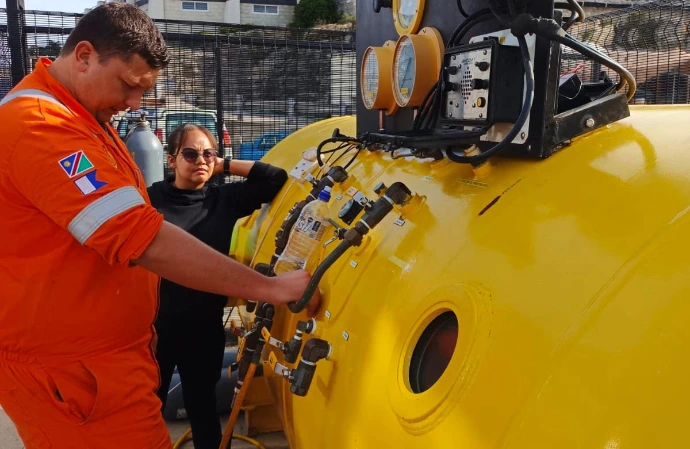
Available One Day Training Programs
Place text here...
Identify core components—including main gas, pneumo, comms, and strength members—and inspect them for kinks, cuts, and outer jacket wear. Execute hydrostatic proof testing using water and low-pressure leak checks using air to verify hose integrity. Perform continuity and insulation resistance (megger) tests to detect short circuits, breaks, and earth faults across comms and video cores. Master approved methods for re-ending hose fittings, splicing cables, bundling lines, and installing mechanical strain relief. Implement proper flushing, sanitizing, drying, coiling, and storage protocols to prevent contamination and prolong umbilical service life.
Understand the core objectives, operational benefits, and regulatory standards governing computerized plant maintenance systems. Learn how to set up the system application, configure user environments, and connect databases securely. Master asset hierarchy setup, automated preventive maintenance scheduling, and work order tracking. Log service histories, parts replacements, downtime data, and repair details to maintain audit-ready operational traceability. Generate equipment compliance certificates, verify sign-offs, and validate that assets meet mandatory safety standards.
Learn safe rigging configurations, working load limits (WLL), and correct operational handling for lever hoists and Tirfor wire rope pullers. Understand lifting equipment compliance codes, mechanical advantage principles, ratchet-and-pawl systems, and overload protection shear pins. Master teardown procedures, brake assembly servicing, wire rope and chain care, lubrication protocols, and manufacturer-approved component replacements. Inspect hooks for throat opening, chains for stretch, and cables for bird-caging, followed by light-load and full-capacity function testing. Execute post-immersion strip-downs, freshwater flushing, corrosion assessments, proof-load testing, and mandatory recertification for subsea equipment.
Learn high-pressure fluid injection hazard prevention, PPE requirements, zero-pressure de-energization protocols, and workshop compliance standards. Understand fluid power fundamentals, operating versus burst pressures, flow rates, and how hoses interact with pumps, valves, and actuators. Identify hose layers, dash sizes, reinforcement types, and thread standards including JIC, BSP, DIN, and SAE flanges. Master accurate hose cutting, skiving procedures, insert depth marking, die selection, and calibrated swaging machine operation. Diagnose common assembly failures, including minimum bend radius violations, hose twisting, mechanical abrasion, and thermal degradation. Perform caliper crimp-diameter verification, hydrostatic proof-pressure testing, assembly tagging, and compliance sign-off.
This module covers the operational principles, thermodynamic cycles, and mechanical design of multi-stage high-pressure compression systems. Participants will learn how air is progressively compressed across multiple cylinder stages, cooled via intercoolers, and delivered to high-pressure storage banks or self-contained breathing apparatus (SCBA/SCUBA) cylinders at pressures typically exceeding 200 to 300 bar (3,000 to 4,500 psi).This section details critical risk management procedures, lockout/tagout (LOTO) protocols, and routine preventive maintenance required to ensure long-term equipment reliability. Training focuses on daily pre-operational inspections, synthetic lubrication management, interstage condensate draining, drive-belt alignment, valve servicing, and the safe replacement of chemical purification and filtration cartridges.Students will gain practical experience in operational system diagnostics and breathing-air quality verification to prevent physiological hazards like hypoxia, hypercapnia, or toxicity. The coursework teaches how to use electronic analyzers and colorimetric test kits to measure and document trace contaminant levels—specifically verifying that carbon monoxide (CO), carbon dioxide (CO₂), moisture/dew point ($H_2O$), and residual oil mist or hydrocarbons fall strictly within legal breathing-air safety limits.
Learn the operational mechanics of diaphragm and piston systems, balanced designs, and gas delivery. Understand how high cylinder pressure is stepped down into a stable intermediate working pressure across dedicated ports. Practice complete teardown, ultrasonic cleaning, O-ring replacement, and rebuilding to factory torque specifications. Test and calibrate pressure relief valves to prevent low-pressure hose ruptures caused by high-pressure seat leaks. Inspect parts for internal corrosion, thread wear, damaged knife-edge sealing orifices, and clogged inlet filters.
Learn how two-stage systems step high cylinder pressure down to intermediate levels and deliver gas comfortably at ambient pressure. Master the operation, setup, and safety features of precision industrial regulators commonly used in control panels. Understand gas flow dynamics, orifice sizing, pressure drop (droop), and how to maintain adequate volume under high demand. Compare different mechanisms, including diaphragm versus piston models and balanced versus unbalanced designs. Practice routine care, inspection procedures, leak testing, and dynamic seal replacements to prevent premature failure. Perform full overhauls, seat replacements, pressure tuning, and final bench testing to meet manufacturer specifications.
Learn the fundamental physics of gas expansion, hoop stress on cylinder walls, and the mechanical forces exerted under high pressure. Decipher manufacturer stampings, DOT/ISO specification codes, tare weights, test dates, and alloy designations for steel, aluminum, and composite cylinders. Verify thread form, pitch, and diameter matching—such as M25 versus 3/4" NPSM—to prevent catastrophic thread mismatch failures. Utilize calibrated plug and pitch gauges to inspect neck threads for crest shearing, thread expansion, and structural wear beyond allowable tolerances. Apply controlled depressurization, safe valve removal protocols, and systematic step-by-step external and internal inspection routines. Master the use of internal inspection lights, dental mirrors, depth micrometers, and ultrasonic wall-thickness gauges in compliance with CGA and ISO inspection standards.
Place text here...
Place text here...
Place text here...
Place text here...
Enrolment Cost
- Certificate on completion
- Complete at your own pace
- Online Training
- Practical Examination included